WebsitesElectric commuting guide
GoFuelFree
GoFuelFree begins with trips people already make, like the drive to work, the grocery run or the last mile from the train, and asks which of them might be better on a small electric ride. I designed and built the identity, the magazine pages and the tools together.
Your week, before any spec sheet
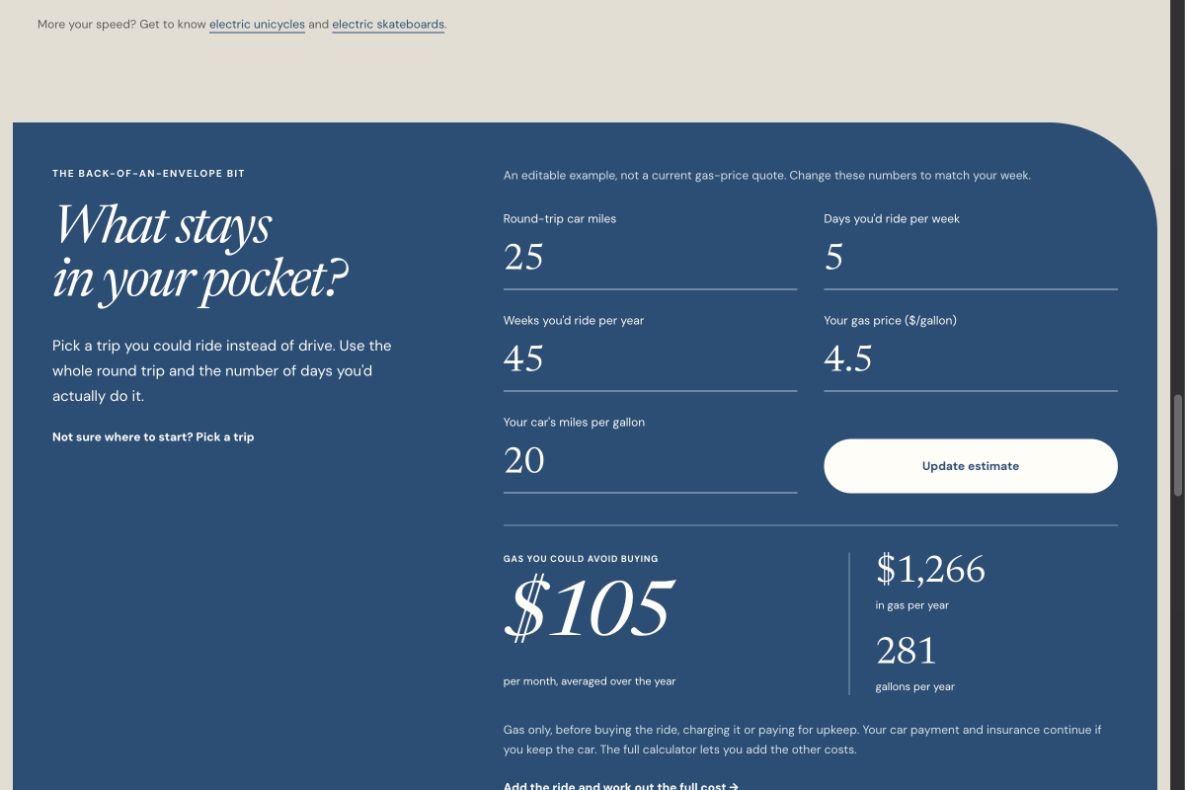
The homepage opens with a quick estimate of the fuel money someone might not need to spend. The fuller calculator adds the purchase price, charging and upkeep, and every assumption is visible so you can change it to match your own week.
The guides work the same way. An apartment can mean stairs, a narrow elevator and nowhere to keep a bike. A commute can include a train, a steep hill or a stretch of road you'd rather avoid. I wanted people to recognize their own routine in the questions.
Let the route pick the machine
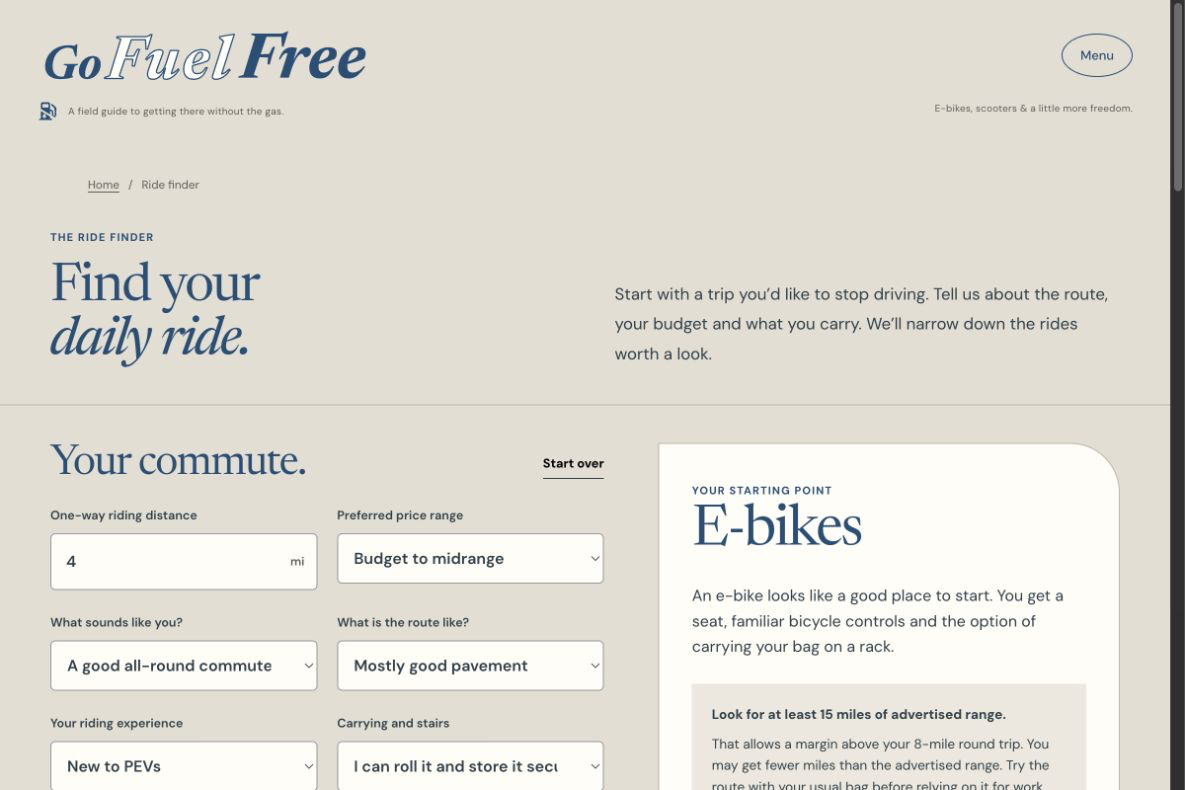
E-bikes, scooters, Onewheels, electric unicycles and electric skateboards are each good at different things, so the ride finder starts with the trip: bags, hills, stairs, pavement, distance, and where the thing will live when you're not riding it. The comparison pages put the likely candidates side by side with links to the products. Range depends on the rider, the terrain and the pace, so the guides around the tables explain what the numbers mean for an actual trip.
A magazine with tools in it
I wanted it to feel like a printed field guide: big editorial type, warm paper tones, blue lettering, numbered entries and a small crossed-out gas pump in the masthead, which moves a little. There are stories, city pages, checklists, and a laws-and-access section that keeps its sources and review dates right next to the rules, since what's allowed depends on where you ride.
The calculator, finder and search all run in the browser with no account, so you can try a few different commutes and compare them.
I designed and built the identity, editorial pages, ride finder, comparison and commute calculator.